


G ermany's industrial giants are pouring billions into AI. Siemens, BASF, Mercedes-Benz—they're all in. The goal is clear: close the gap with the US and China.
But there's a problem.
They're spending big when uncertainty is highest. That's the exact opposite from what we've seen works.
Smart investments and enterprise engagement centers around what's known as an `Uncertainty Curve` model. The principle is simple: spend least when you know least, increase investment as certainty grows. It's common sense when you think about it. You wouldn't write a £1 million cheque to a builder before getting planning permission, would you?
Yet that's precisely what's happening with AI across Germany right now.
The Real Cost of Getting It Backwards
There's likely reckless development into areas without fully grasping the consequences. AI could impact society as negatively as it can positively; we just don't know enough yet. Without proper planning for risk and preparing people for the change, we're gambling with more than just money.
Second, there's the economic bubble risk. If everyone's investing based on fear of being late or last rather than strategy, they're setting up for a burst that will hurt far more than the initial outlay.
Third, of course there's wasted effort, time, and money on the wrong things.
42%
Abandoned Initiatives in 2025
80%
AI Project Failure Rate
The data backs this up. The share of companies abandoning most AI initiatives jumped to 42% in 2025 , up from just 17% in 2024. Over 80% of AI projects fail which is twice the rate of non-AI technology projects.
Fear or Blind Desire Is Driving Investment, Not Strategy
What we're hearing in boardrooms is an eagerness to not be left behind. There's a desire to enable what's possible with AI simply because it's possible or they should be.
That's fear talking.
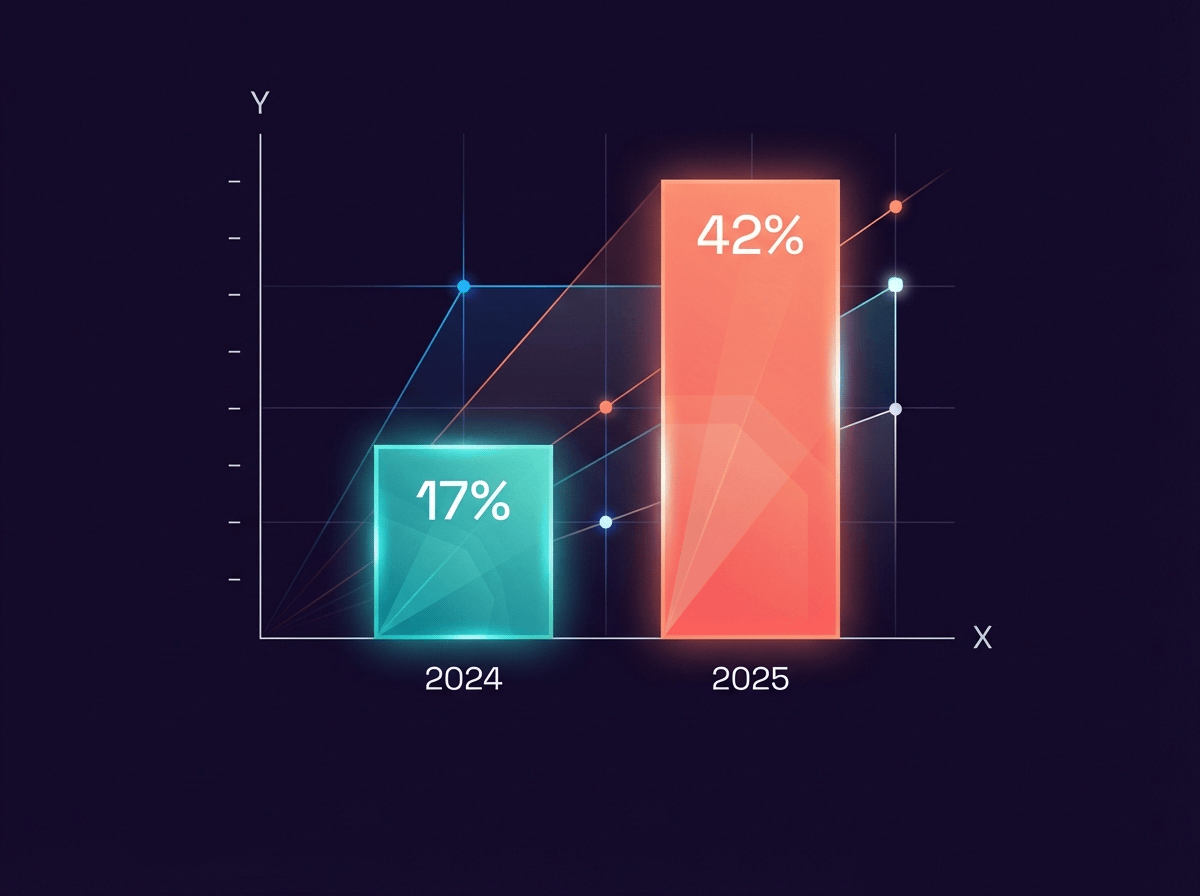
German firms feel caught between wanting to attract more investment back to the region and not being as politically driven as the US-China AI race. The result? Unbalanced focus on technology when it's actually the data, process adoption, and people changes that will make or break success.
Germany's cultural strength, engineering rigour and thoroughness, has become a liability when the game rewards rapid iteration over perfect planning.
The Grand Announcement Trap
Here's what tells us a company is about to make an expensive mistake: the grand announcement.
When you launch with fanfare, you've already created pressure to succeed just to save face. The whole point of running experiments is to work out whether something should be done, done differently, or not done at all.

You can't spin a failed large programme as a success after a grand launch. No one wants to be associated with the grand launch that becomes the grand failure.
What German Enterprises Should Do Monday Morning
Focus on foundations first: people, processes, structure, and data. It's not as sexy as AI, but successful implementation depends on it.
Take small steps quickly. We all know you can fix foundations faster when you work in experiment-sized pieces. Implement tech or AI in an isolated area, show results quickly, and respond to changes as they happen.
Start where you are. Take stock of the current relationship between development and controls from a people perspective. Then outline ways of working that keep both sides close.
The EU's AI Act adds another layer of complexity. Legislating before there's clarity on how legislation should work or be policed sets things up to fail. Break down the silos between legislators and developers. Get them in the same room, working on the same problems.
Apply Rigour to How People Work Together
Germans have traditionally always been well organised. If they bring that rigour to bear on ways of working; the people's ways of working, it could benefit everyone involved in developing this technology.
Be rigorous about collaboration, experimentation, and learning rather than rigorous about planning and compliance alone.
It's fine to make grand announcements on intention. But that intention should include baselining how people work and the technology, with milestones and checkpoints at small steps. Make the success of the initiative as much about the journey as the destination.

The alternative? Keep spending billions at peak uncertainty and watch 42% of those initiatives get abandoned.
Small cheques first. Learn. Then write the big ones.
Written by HiveMind Network
Expert insights on technology investment, industrial transformation, and the intersection of human capital and artificial intelligence in the DACH region.