


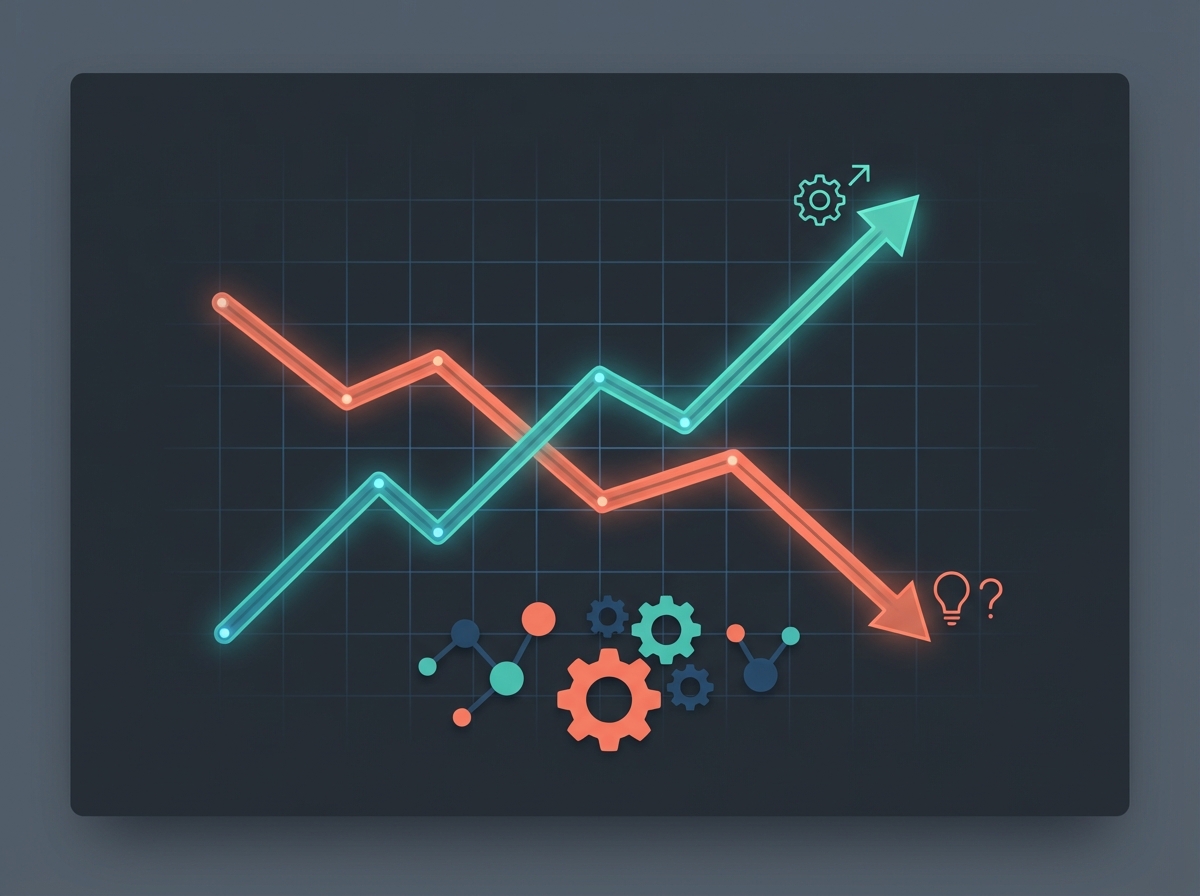
I n today's fast-evolving business landscape, anything new represents a risk. However, businesses that fail to adopt new ideas, processes, or talent will struggle to remain relevant, let alone competitive. Innovation is now an essential pillar of success, particularly in an era where AI and emerging technologies are reshaping industries. These advancements are redefining how we work, evaluate performance, and deliver value to customers. According to the Government's Innovation and Growth Report, UK organisations that innovate grow at approximately twice the rate of those that do not. Nevertheless, the innovation that drives such growth inherently carries significant risk.
Moreover, the rapid pace of technological transformation adds further complexity. The UK Innovation Survey 2023 revealed that only 36% of UK businesses surveyed were innovation-active, a noticeable decline from 45% in 2020. This begs the question: why are we seeing reduced investment in innovation at a time when technological evolution is accelerating?
2X
Growth rate of innovative UK organizations vs. non-innovators
36%
Innovation-active UK businesses in 2023 (down from 45% in 2020)
The Challenges of Embracing Innovation
Change, by definition, requires decisions that introduce new elements into the business. While the associated risks can be daunting, accelerating decision-making can catalyse innovation and drive growth. Decision-making in this context is often fraught with difficulty. Why is supporting innovation so challenging?
- 1. Environmental Instability The business environment is in a state of flux, driven by technological disruption, political uncertainty, and resource constraints.
- 2. Interconnected Factors Seemingly unrelated elements can have a profound impact on key business decisions, making it difficult to assess all variables accurately.
- 3. Lack of Precedent Innovation often involves navigating uncharted territory. Without a clear blueprint, decision-makers must venture into the unknown without historical data or prior examples to guide them.
- 4. Evolving Goals As innovation progresses, business objectives may need to adapt. While uncomfortable, this is an essential part of the process.
- 5. Team Experience Teams are often unfamiliar with the decision-making processes involved in innovation, further complicating the journey.
Recognising that you are operating in untested waters enables you to embrace risk and evaluate the potential rewards of innovation.

Image: HiveMind Network / AI Generated
The High Stakes of Leadership in Innovation
Leaders are tasked with delivering results, managing teams, safeguarding resources, and maintaining their reputations. Many of their decisions are data-driven, drawing on past performance and insights from the sector. Innovation presents a different challenge. It requires stepping into a space where data is scarce and past precedents are absent.
So, how should leaders navigate decision-making in an innovation context when traditional data and industry examples are lacking?
Strategies for Accelerating Innovation Decisions
Clarify Priorities
Innovation is not achieved by hedging bets. Instead of balancing options for incremental change, focus on what matters most and commit to it decisively.
Adaptability
Understand that your starting point may shift as the innovation evolves. Flexibility is crucial.
Experiment and Learn
Start with an assumption and test it in real-world conditions. The iterative process of hypothesis testing is key to refining your approach.
Take Calculated Risks
Focus on the most critical element of your plan. If customer impact is paramount, engage a key customer in your test case. Prioritise areas of greatest impact to ensure meaningful results.
Act Swiftly
Organisational-wide consensus can be time-consuming and may never fully materialise. Innovation often requires decisive action, supported by key influencers.
Understand Your Constraints
Budgets, regulations, and legal frameworks exist for good reason, and they shape what is possible. Use these constraints to fuel creative problem-solving.
Conclusion
Innovation demands a shift in mindset—one that embraces risk and actively seeks resilience and reward. Applying conventional business thinking to innovation often leads to missed opportunities and diminished competitive advantage.
Leaders are defined by their ability to decide when, why, and how to innovate. Navigating the uncertainty inherent in this process is what sets successful organisations apart, enabling them to thrive in a constantly changing environment.
Written by
Owen Mills
A HiveMind Network Expert, specializing in supporting clients with structural execution and organizational resilience in high-pressure environments.