


Data-driven decisions are based on factual data and avoids the risks of unconscious bias and perceived intuition. It can bring many strategic benefits for organisations:
Enabling the validity of these decisions is the prerequisite that the data must be factual, which requires it to be accurate, accessible and up to date.
Robust Data Governance and Security
The first step to achieve the prerequisites for data-driven decision-making is to ensure that robust Data Governance is put in place:
1. Knowing your data
Understanding the data being generated in your company.
2. Master Data Management (MDM)
A comprehensive approach to ensuring the accuracy, consistency, and stewardship of your critical data assets, such as customer, product, and supplier information.
3. Data Lifecycle Management
Managing data throughout its lifecycle, from initial data entry to final data destruction.
4. Data Pipeline Management
Involves orchestration, monitoring, and maintenance practices that ensure data flows efficiently and reliably from source to destination ideally in real-time fashion.
5. Data Quality
An iterative process that starts from the moment it is generated. It should be fundamentally accurate, complete, and formatted to meet needs. You cannot assume the data you receive is clean.
6. Information Security
Ensuring regulatory compliance including Data Protection and Cyber Security.
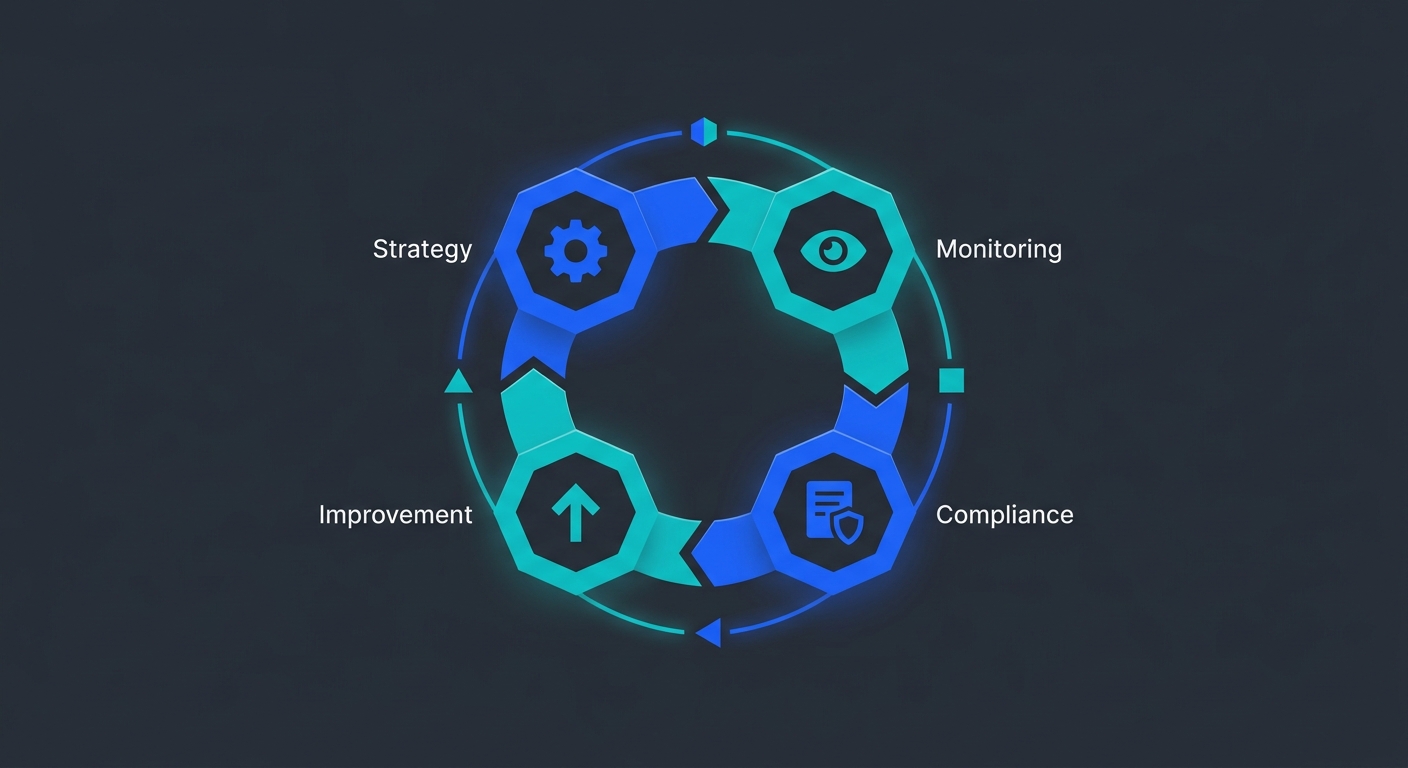
Figure 1: The Data Governance Framework. High-integrity decision making requires a closed-loop system of stewardship, security, and quality assurance.
Enterprise-wide Data Architecture
The next step is to create a common Data Architecture across the organisation. The following steps are required to establish this:
- → Map the data required to the specific business outcomes.
- → Define the single source of truth and ownership for each data element.
- → Document the data model and definitions.
- → Define the metadata strategy and associated Master Data Management (MDM).
- → Implement the IT solutions required e.g. cloud, database, analytics tools etc.

Data Analytics and AI
The final step is to analyse the data and enable it for data-driven decisions to be made.
Data should serve a specific purpose rather than merely populating dashboards or reports. When data collection and analysis are untethered from clear business objectives, the result is often wasted resources and missed opportunities. By starting with a precise business objective, organisations can:
Focus
Focus data collection efforts on relevant information.
Design
Design appropriate analytical approaches.
Measure
Measure success against tangible business outcomes.
Communicate
Communicate findings in ways that drive action.
Defining Effective Objectives
An effective business objective should be:

The Role of AI
Artificial Intelligence (AI) can play a crucial role in data-driven decision making by analysing large volumes of data at a speed and scale that humans cannot achieve. It can improve accuracy, efficiency, and the ability to uncover valuable insights that can drive business growth.
Written by
HiveMind Network
The global network of experts helping organizations navigate the future of technology and data.
In Collaboration With
 Ole Christensen
Peer Reviewed By
 Grace Docherty
 Ruth Walker